 Shelby Sapp
 Iman Gadzhi

 Provider case study
Fine jewelry
Diamonds International reported a 70% increase in financed sales after it introduced its ClarityPay program.
Read the source PARTNER PLAYBOOK
Start with a sale the merchant couldn’t close at checkout. Find out where the buyer got stuck before you pitch financing.
A buyer can be ready to enroll and still need a way to spread out the cost. Put the pay-over-time option on the webinar checkout, then give the sales team the same option to walk buyers through on follow-up calls. Track funded sales from each channel to see how many buyers actually use it.
Estimates shared by Blake Toves. The videos below show how these creators sell coaching and training.
Walk me through the last sale that got stuck at payment. What did the customer need, and what could you offer them?
Give your sales team an if-then playbook for buyers who want to buy but can’t pay in full today. Providers vary in what they can fund, how fast they decide, what the buyer pays, and what the merchant keeps. For each common price point, pick a first option and decide what to do if it falls short.
Yes: Offer standard checkout. No: Confirm the purchase price, the amount they want to finance, and what they can comfortably repay. Continue below if they want to explore financing.
Rule out options that don’t support the amount, product, or location. Start with the available provider most likely to give the buyer a fast decision and cover the amount they need on workable terms. Compare buyer cost and merchant fees when more than one option fits.
The buyer reviews the APR, payment schedule, and total repayment. If they accept, confirm that checkout went through.
Check whether the buyer can comfortably cover the difference and checkout supports it. If either condition fails, consider the next eligible option.
With the buyer’s agreement, try the next provider that fits. If none does, offer a lower-priced option or let the buyer pause.
For an eligible U.S. purchase, start with ClarityPay’s soft-check preapproval. Whop lists eligible purchases from $500 to $30,000 and terms up to 36 months. Consider Klarna as a fallback if it’s available and your checkout data shows it can fund comparable purchases on workable terms.
Whop lists Sezzle for purchases up to $2,500. Try it if it appears at checkout and the repayment schedule fits. Put it first if your own results show it funds more of these purchases or costs less at your actual merchant rate. Consider ClarityPay if the buyer needs a longer term and it’s available.
These are example routes. A 650 score alone doesn’t predict an approval, a funded amount, or a rate. The provider assesses eligibility through its own checkout.
For each price range, record your first option, fallback, and when to stop. Review how often buyers get the full amount, how long decisions take, which offers turn into completed purchases, and the actual fees. Use those results to change the order when a different provider performs better.

The buyer pays in installments using available credit on an existing card. Verify the seller’s fee and reserve schedule for Splitit.
Work through Splitit settlement“If the 6% option closes the sale while the buyer is still engaged, keep it first. Which sales do you lose because the offer is too small, takes too long, or isn’t available to your business? Let’s test ClarityPay on those sales and check what you actually keep after fees.”
Compare completed purchases and rep minutes per application. On a $10,000 sale, the fee difference is $900. Verify merchant eligibility, buyer terms, and actual checkout timing before quoting any result.
Work through the fee objection Show the quarterly impact of faster decisions Review pricing and pay-in-full discountsOur ClarityPay merchant program charges 15% on financed purchases. On a fully financed $10,000 sale, the fee is $1,500 and $8,500 remains before other costs. Deduct sales commissions, referral fees, and delivery costs to calculate contribution. Then ask whether the buyer would have paid by card anyway. The buyer’s offer sets their own APR and repayment terms.
Compare fees and completed salesWhop reviews the business and its offer first. Then each buyer applies through checkout. They may receive a full offer, a smaller offer, or no offer. Share the actual terms the buyer sees.
Review merchant eligibilityFirst verify the full purchase succeeded. Then check when proceeds become available after settlement and any reserves, and confirm the estimated arrival of the bank withdrawal.
Watch the settlement lesson Show the offer-to-bank flowchartAsk which buyers their current provider serves well and where deals still drop off. Compare how much buyers qualify for, what the merchant pays, how often deals complete, and when the business gets its cash.
Review the different ways buyers can pay over timeExplains checkout, the 15% standard merchant financing fee, and what the merchant keeps.
Use with a prospect after confirming the exact service. Eligibility depends on merchant review.
I’d like to introduce [owner] at [business and website]. They sell [offer] at [price] and process about [monthly volume] with [current provider]. The team is losing sales when [specific checkout problem]. I know the owner through [relationship]. Can we review one offer and its financing fit with [decision-maker] this week?
Have the merchant submit processing statements through Whop’s private review process.
Use a case from the merchant’s industry. Each source describes the program and any result it reported.
Provider case study
Diamonds International reported a 70% increase in financed sales after it introduced its ClarityPay program.
Read the source Provider case study
Simba Sleep completed about 40% of its French checkouts through Splitit, according to the provider’s case study.
Read the source Program launch
JetBlue launched pay-over-time flight booking with ClarityPay and included TrueBlue points on eligible purchases.
Read the source Provider case study
Huntington Learning Center offered card installments for tutoring. A participating owner reported enrolling families who lacked another suitable payment option.
Read the source Program launch
Safe Home Security added financing for security and home automation equipment. Its sales team can start applications from its CRM.
Read the source Provider case study
Canyon recorded 1,500 Splitit transactions across six countries in the first four weeks.
Read the source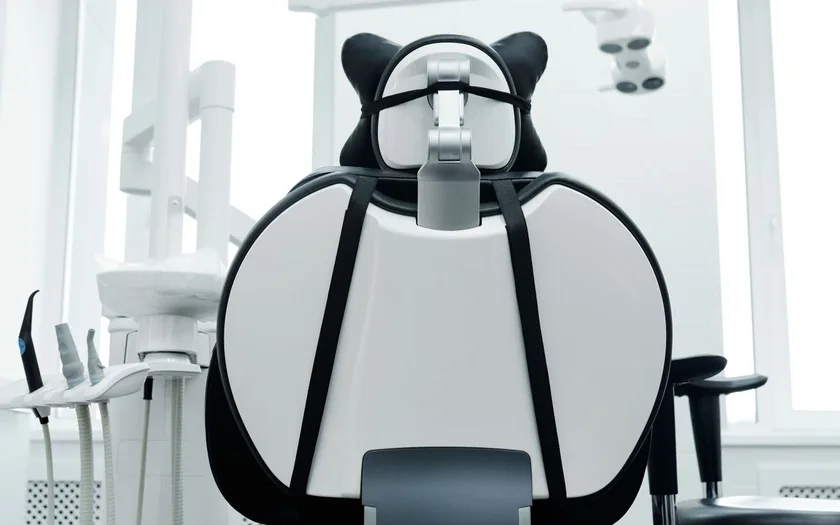 Provider interview
ClarityPay described tailoring financing around the full price of implant treatment at a dental group.
Read the source Provider case study
Yarbo recorded a 112% increase in sales through YarboPay after relaunching its Splitit-powered installments under its own brand.
Read the sourceThe photos illustrate each industry. Whop reviews eligibility and terms for each new merchant.